Welcome to Dongguan Dean Testing Co., Ltd. Hotline: 0769-81666160(Headquarters) 0769-88087383(Testing Department)

 Home > Our Services > Asian Certification > TELEC Certification in Japan
Introduction
The certification of radio frequency equipment in Japan is called Radio Equipment Type Approval, and the official regulatory agency is the Ministry of Internal Affairs and Communications (MIC) of Japan. The main certification agency is TELEC (Telecom Engineering Center) designated by MIC, and there are also 12 certification agencies such as RF Technologies/JQA/SGS/ITS/TUV/UL, so it is commonly referred to as TELEC certification, or MIC certification, RF certification, GITEKI certification, and technical adaptation certification, similar to SRRC certification in China.
TELEC certification follows Japan's Radio Law, and the specific testing standards follow MIC (Ministry of General Affairs and Communications) Notice No. 88 regulations. According to the requirements of Japan's Radio Wave Law, the production, sale, and operation of wireless equipment in Japan must comply with technical regulations approved by MIC and be required to apply for a type approval certificate (i.e. TELEC certification) for wireless equipment.
TELEC Certification Basic Information
Mandatory: Compulsory certification
Factory inspection requirement: No requirement, but ISO certificate or recognized quality control document is required
Certificate holder requirement: No requirement
Certificate Validity Period: None
Certification cycle: about 4-6 weeks
Technical information: Voltage frequency AC 100V/200V, 50Hz/60Hz, plug JIS 8303
Instructions for TELEC Certification, GITEKI Certification, MIC Certification, and MARK Technical Adaptation Certification
·TELEC certification and GITEKI certification
The full name of Japan's TELEC is TELECom Engineering Center, which is recognized by the Ministry of Internal Affairs and Communications of Japan as the issuing authority for the Radio Wave Law. In 2014, the TELEC organization also obtained the certification qualification for the Electrical Communication Industry Law. Nowadays, in layman's terms, TELEC certification is equivalent to GITEKI certification.
·TELEC certification and MIC certification
The Ministry of Internal Affairs and Communications, abbreviated as MIC, is the regulatory agency for Japan's Radio Wave Law and Electrical Communications Act. In layman's terms, MIC certification is equivalent to TELEC certification.
·TELEC certification and MARK technical adaptability certification
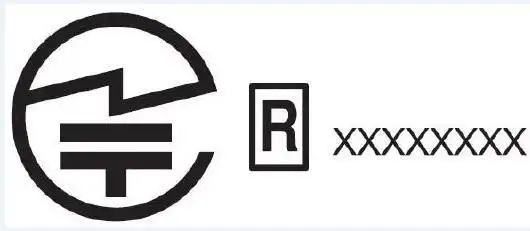
After passing the TELEC certification, products can be printed with the GITEKI logo. GITEKI comes from the Japanese name for certification: "Gisho maku", and the Japanese word Gisho Romanized GITEKI. Therefore, GITEKI certification is also known as Gisho certification, and GITEKI certification and Gisho certification are just different names.
Certification classification
TELEC certification includes Test Certification and Type Certification. Test certification is a verification process for each device unit, which is only valid for each verified device unit;
Type certification refers to the verification of samples of a batch of equipment with the same design and manufacturing. The certification is valid for all equipment in the batch, but if there are changes in the design or manufacturing of the equipment, it will need to be re certified.
It is worth noting that the use of non low power wireless power stations and their terminal equipment requires applying for a license from MIC. In addition, there are two situations for compliance certification of telecommunications terminal equipment:
·For ordinary telephone devices, as long as they undergo JATE certification in accordance with the requirements of the Telecommunications Industry Law;
·For wireless terminal devices, in addition to JATE certification required by the Telecommunications Act, TELEC certification is also required according to the requirements of the Wireless Law.
Applicable product scope
TELEC certification applies to wireless RF products including Bluetooth products, ZigBee products, telemetry devices, WiFi products, wireless microphones, pagers, LTE · RFID (2.4GHz, 920MHz) products, UWB radio systems, GSM products, etc.
Application Process
1. Fill out the application form, prepare materials and samples
2. The testing agency reviews the materials and conducts preliminary testing on the samples
3. The testing institution formally applies to the institution recognized by the MIC of the General Affairs Department
4. Institutional review documents
5. Sample testing, providing test reports (which can be tested by authorized laboratories)
6. After the documents and test reports are approved, Japan MIC will issue the certificate
application materials
1. Technical Model Specification Table
2. Quality Management System Statement
3. Quality Control Confirmation Method or Manufacturer ISO 9001 Certificate
4. Confirmation of Construction Guarantee Letter
5. Rated power declaration
6. Antenna report
7. The test report includes test results, photos of test settings, and inspections conducted
8. Box diagram, schematic diagram, bill of materials, parts placement, IC data sheet, internal and external photos, product description, user manual, operation/technical instructions, accessory instructions)
9. Tag information, tag position, tag content
10. If you act as an agent or authorized representative of the manufacturer, you also need a letter of authorization/authorization
Certification Fee
The cost of TELEC certification varies depending on the product and its features. For example, if the product comes with Bluetooth, WIFI, 2.4GHz functions, the number of functions varies, and the cost also varies. Even if the Bluetooth single-mode and dual-mode are different, the cost also varies. The specific issue of TELEC certification fees needs to be evaluated before providing a quotation. The majority of TELEC certification quotations for common products start at 10000 yuan.
Other
Testing requirements for Bluetooth and WIFI products
Test certification is a verification process for each device unit, which is only valid for each verified device unit; The testing items for WiFi and Bluetooth products are basically similar to the European standard EN300 328 The standard used for 2.4GHz WiFi products (802.11b/g, 2412-2472 MHz) and Bluetooth products is MIC Notice No. 88 Annex 43. However, for the 14 channels (Channel 14:2471-2497MHz) of 2.4GHz WiFi products, Annex 44 needs to be used separately for testing and reporting, and the corresponding fees also need to be increased. For 5GHz WiFi products (802.11a, 5180~5320MHz, W52 Band, and W53 Band), the testing standard followed is Annex45. However, it should be noted that according to the information, MIC will soon modify Annex45 to include 5.6GHz devices (Band W56) and have stricter DFS testing requirements for the Band 56 frequency band.
Bluetooth product testing content
1. Frequency Error Measurement
2. Coupling bandwidth/carrier bandwidth test (Occupated Bandwidth and Spread Spectrum Bandwidth/Factor)
3. Unwanted Emission Intensity Measurement
4. Antenna Power Error Measurement
5. Limitation of Collateral Emission of Receiver Measurement
6. EIRP Antenna Gain (EIRP Antenna Power) Measurement
7. 3dB Beam Width Measurement
8. Duty cycle measurement
9. Retention time testing

Copyright © Dongguan Di'en Testing Co., Ltd. Technical Support: Dongguan Guangsu Network Guangdong ICP No. 15086094-1
Mailing Address: Di'en Testing, Wusha Community, Chang'an Town, Dongguan City
Metrology & Calibration Contact:
Mr. Tai - Mobile: 13760389645
Ms. Li - Mobile: 15817661429
Product Testing Contact:
Ms. Yang - Mobile: 18123900885
Reliability, Failure Analysis, & Materials Testing Contact
Mr. Ye - Mobile: 13613003484
Copyright © Dongguan Di'en Testing Co., Ltd. Technical Support: Dongguan Guangsu Network Guangdong ICP No. 15086094-1