Welcome to Dongguan Dean Testing Co., Ltd. Hotline: 0769-81666160(Headquarters) 0769-88087383(Testing Department)

 Home > Our Services > Chinese Certification > China Robotics CR Certification
Introduction
CR certification, also known as China Robot Certification, is a certification that is planned, created, designed, and ultimately determined under the guidance of the main members of the National Evaluation Center Guidance Committee, including the National Development and Reform Commission, Certification and Accreditation Administration, Ministry of Industry and Information Technology, and National Standards Committee. It is mainly aimed at the new certification of robot products. The full name of CR certification is "China Robot Certification".
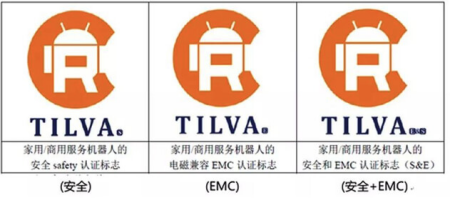
CR certification mark
·Robot Certification
·China Robot Certification
·China Robot
The meaning of CR logo
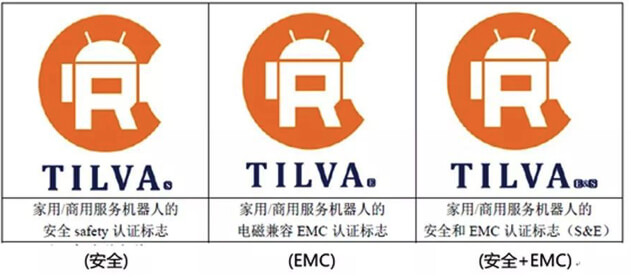
The overall image of the CR logo is evolved from the letter C nested with the letter R and pictographic representation, presenting a full circle with a vivid robot image. The letter C is the first letter of China and Certification, and R is the first letter of Robot. The logo can be interpreted as Robot Certification or China Robot Certification, expressing that with the booming development of the robot industry and the continuous expansion of application fields, quality issues such as robot safety and reliability have received widespread attention from the public.
Experts say that the circular symbol represents protection and infinity, perfection and completeness. The agile robot moves freely in a circle, representing the infinite energy and power of the robot industry under the protection of certification, and also symbolizing the vigorous development of the industry and the future perfect harmony.
The orange color of the CR logo is widely used in safety colors, with seriousness and professional characteristics, symbolizing the influence and credibility of robot certification. In the future, the "China Robot Certification (CR)" logo will serve as the unified logo for China's robot certification. Approved robot product certification agencies will use this logo for robot certification, which will help establish a unified image for China's robot certification, facilitating identification, promotion, acceptance, and promotion.
In the process of using the logo, the name of the certification body is combined with the basic pattern to reflect the main certification responsibility of the certification body. The accompanying letters represent certification types: S represents safety certification, E represents electromagnetic compatibility certification, and the simultaneous appearance of E and S represents comprehensive certification of safety and electromagnetic compatibility, which facilitates market and customer judgment.
The product scope of CR certification
CR certification is applicable to electronic products in the form of robots that can autonomously move and provide services according to preset programs. As long as they belong to the category of robot products, they can undergo CR certification.
Definition of Robot
The national standard GB/T 12643-2013 defines service robots as robots that can perform useful tasks for humans or equipment, except for industrial automation applications.
Classification of service robots
Service robots are divided into three categories: personal/household service robots, public service robots, and special operation robots. Details are as follows

CR certification application mode
There are generally two modes for applying for CR certification for Chinese robots:
Mode A: Type test, certification certificate is only valid for the submitted sample (add product sequence on the certificate), and the certificate is valid for 3 years;
B mode: type test+factory inspection+post certification supervision (the certificate is applicable to products of the same model that are manufactured), with a validity period of 5 years.
The difference between A and B modes: B mode requires robot labeling, which means labeling. Mode A has no labels.
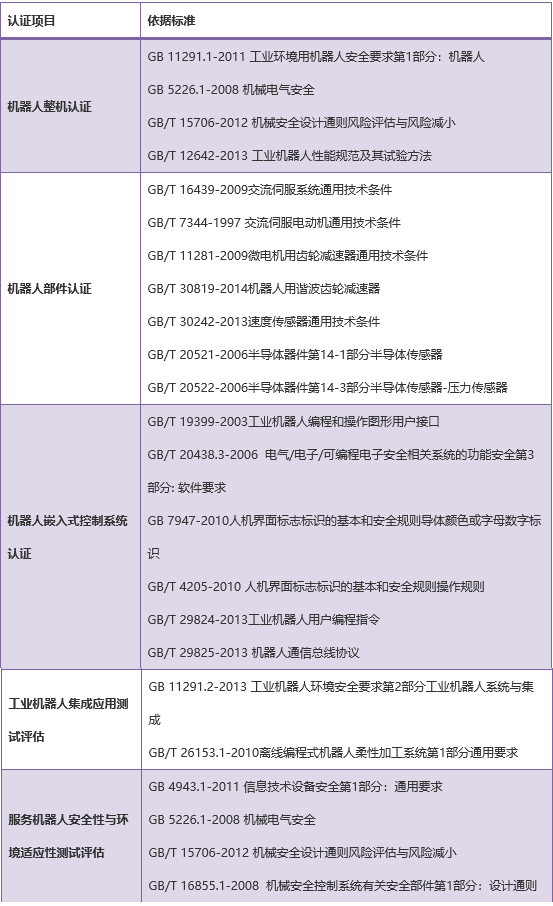
Certified project standards
Application Process
1. The enterprise submits an application to NTEK testing agency (fill in the corresponding application form)
2. Institution Acceptance Application (Acceptance Application Form)
3. Both parties sign the contract and execute it
4. The enterprise provides corresponding technical documents, including a prototype;
5. Institutional confirmation of technical documents and sample review;
6. Review completed and arrange testing;
7. Test completed and passed, technical documents organized and submitted to the institution for application;
8. Successfully applied for certification and scanned it for the company;
9. Closing the case;
Chinese robot CR certification cycle: 2 months, requiring 2-3 prototypes.
Application Materials
List of specific documents involved in the robot certification process
1. Application materials
(1) Formal application form (after filling out the application form online, print or download the blank application form to fill in)
(2) Factory Inspection Survey Form (when applying for Mode B for the first time)
(3) Product Description
2. Proof materials
(1) Registration certificates of the principal, producer, and production enterprise, such as business license and organizational code (at the time of initial application)
(2) When the principal is a seller or importer, they must also submit copies of relevant contracts signed between the seller and the producer, or between the importer and the producer
(3) Authorization letter of the agent (if any)
(4) Effective supervision and inspection reports or factory inspection reports (if any)
(5) Other required documents
3. Provide information related to the product
(1) Product assembly drawing, electrical schematic diagram, product manual, etc
(2) Electrical parameter table
(3) List of key components/parts and related certification reports
(4) Explanation of differences between various models of products within the same application unit
(5) Radio Model Approval Certificate
Should robots undergo CR certification or CCC certification in China?
Robot CR certification is currently a non mandatory certification, while CCC certification is a mandatory certification in China. If you want to sell in China, you need to do CCC certification, provided that the product is in the 3C catalog. It should be noted that currently, many robotic human products apply for CCC certification based on the scope of CCC product certification, which includes Class 08 audio and video equipment, Class 09 information technology equipment, and Class 16 telecommunications terminal equipment. In addition, according to the explanation provided by the Secretariat of the TC03 Technical Expert Group of the State Administration for Market Regulation and the China Quality Certification Center regarding document TC03-2019-01, electronic products in the form of robots that can autonomously move and provide services such as mobile guidance, transmission, cleaning, etc. according to pre-set procedures (such as welcome robots, food delivery robots, etc.) are not classified as mandatory products in categories 08, 09, and 16.

Copyright © Dongguan Di'en Testing Co., Ltd. Technical Support: Dongguan Guangsu Network Guangdong ICP No. 15086094-1
Mailing Address: Di'en Testing, Wusha Community, Chang'an Town, Dongguan City
Metrology & Calibration Contact:
Mr. Tai - Mobile: 13760389645
Ms. Li - Mobile: 15817661429
Product Testing Contact:
Ms. Yang - Mobile: 18123900885
Reliability, Failure Analysis, & Materials Testing Contact
Mr. Ye - Mobile: 13613003484
Copyright © Dongguan Di'en Testing Co., Ltd. Technical Support: Dongguan Guangsu Network Guangdong ICP No. 15086094-1