Welcome to Dongguan Dean Testing Co., Ltd. Hotline: 0769-81666160(Headquarters) 0769-88087383(Testing Department)

 Home > Our Services > Environmental & Reliability Testing > Salt Spray Test
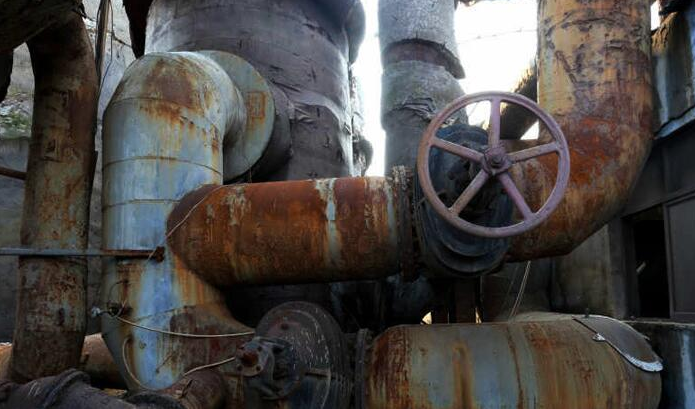
Salt spray testing is an environmental test that primarily utilizes artificial simulated salt spray environmental conditions created by salt spray testing equipment to assess the corrosion resistance of products or metal materials. It is divided into two categories, one is natural environmental exposure testing, and the other is artificial accelerated simulated salt spray environmental testing. The artificial simulation of salt spray environment test is a testing equipment with a certain volume space - salt spray test chamber, which uses manual methods to create a salt spray environment in its volume space to assess the quality of the product's salt spray corrosion resistance performance.
Salt spray test is generally used to evaluate, screen and compare materials (surface facial mask layer) or surface treatment processes. Through salt spray test, potential problem areas and parts in products can be identified, quality control deficiencies can be found, and design deficiencies can be found.
product scope
Salt spray testing can be conducted for electronic, instrumentation, automotive, rail transit, and aerospace products' components, structural parts, assemblies, and complete machines
Relevant qualifications
CNAS,CMA
Test Standards
GB/T 2423.17, IEC60068-2-11, ISO4628-3, ISO9227, ASTM B117, ASTM B368, JIS-Z2371, JIS-G3141, MIL-STD-810F, MIL-STD-883E, etc.
Test Project
The artificial simulated salt spray test includes neutral salt spray test, acetic acid salt spray test, copper salt accelerated acetic acid salt spray test, and alternating salt spray test.
(1) The neutral salt spray test (NSS test) is one of the earliest and most widely used accelerated corrosion testing methods. It uses 5% sodium chloride saline solution, and the solution PH value is adjusted in the neutral range (6.5~7.2) as the solution for spray. The experimental temperature is set at 35 ℃, and the settling rate of salt spray is required to be between 1~2ml/80cm ². h.
(2) The Acetate Salt Spray Test (ASS Test) was developed based on the Neutral Salt Spray Test. It involves adding some glacial acetic acid to a 5% sodium chloride solution to lower the pH value of the solution to around 3, causing the solution to become acidic. The resulting salt spray also changes from neutral to acidic. Its corrosion rate is about three times faster than the NSS test.
(3) The Copper Salt Accelerated Acetate Salt Spray Test (CASS Test) is a recently developed rapid salt spray corrosion test abroad. The test temperature is 50 ℃, and a small amount of copper salt - copper chloride - is added to the salt solution to strongly induce corrosion. Its corrosion rate is approximately 8 times that of the NSS test.
(4) The alternating salt spray test is a comprehensive salt spray test, which is actually a neutral salt spray test plus a constant humidity and heat test. It is mainly used for cavity type whole machine products, and through the infiltration of humid environment, salt spray corrosion not only occurs on the surface of the product, but also inside the product. It alternates the product between two environmental conditions of salt spray and humid heat, and finally assesses whether the electrical and mechanical properties of the entire product have changed.


Common salt spray test chamber

Alternating salt spray test chamber

Copyright © Dongguan Di'en Testing Co., Ltd. Technical Support: Dongguan Guangsu Network Guangdong ICP No. 15086094-1
Mailing Address: Di'en Testing, Wusha Community, Chang'an Town, Dongguan City
Metrology & Calibration Contact:
Mr. Tai - Mobile: 13760389645
Ms. Li - Mobile: 15817661429
Product Testing Contact:
Ms. Yang - Mobile: 18123900885
Reliability, Failure Analysis, & Materials Testing Contact
Mr. Ye - Mobile: 13613003484
Copyright © Dongguan Di'en Testing Co., Ltd. Technical Support: Dongguan Guangsu Network Guangdong ICP No. 15086094-1