Welcome to Dongguan Dean Testing Co., Ltd. Hotline: 0769-81666160(Headquarters) 0769-88087383(Testing Department)

 Home > Our Services > Australian Certification > Australian A-Tick Certification
FCC
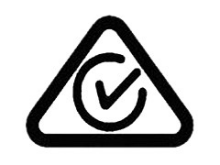
A-Tick is a certification mark issued by the Australian Communications Authority (ACA) for communication equipment.

A-Tick authentication basic information
Certification nature: mandatory certification
Is factory inspection required? No
Do you need a local agent? Yes
Technical information: 240V/50Hz
Certification requirements
1. Import and export must use A-Tick according to the following steps:
(1) The product undergoes ACA technical standard testing;
(2) Register with ACA to use A-Tick;
(3) Fill out the "Declaration of Conformity Form" and keep it together with the product conformity record;
(4) Labeling communication products or devices with the A-Tick logo;
(5) Selling to consumers.
2. A-tiok requirements for telecommunications equipment
According to Part 21 of the Australian Telecommunications Act 1997, Qu, the Australian Communications and Media Authority, is responsible for the technical management of consumer devices and consumer connections related to telecommunications. ACMA has introduced a self-management system based on product labeling and compliance with relevant technical standards, which is implemented in accordance with the Telecommunications Labeling Bulletin 2001. The main purpose of compliance requirements is to ensure that such products comply with the relevant technical standards required by regulatory authorities and are appropriately labeled before being provided or connected to telecommunications networks. The relevant technical standards involve the health and safety of users and operators of integrated telecommunications networks, the interconnection availability of telecommunications networks providing standard telephone services, and the implementation of emergency call services
Australian manufacturers and importers or their authorized agents must affix A-tiok labels or non compliant labels on the products specified in the label notice.
Applicable product scope
Any consumer device and consumer connection that can connect to a public telecommunications network operated by an operator or service provider are considered telecommunications products as defined in the label announcement, such as answering machines, mobile phones, fax machines, telephones (including cordless phones), modems, etc. Telecommunications products, except for three-phase power supply and large communication products, are within the scope of STEK business.
The relationship between SAA certification, C-Tick, A-Tick, and RCM
SAA certification controls safety regulations, C-Tick certification controls EMC and wireless products, and A-Tick certification controls telecommunications products. The RCM mark is a certification mark introduced in 2013. After obtaining safety certification and electromagnetic compatibility registration, products can obtain the RCM mark through safety certification regulatory agencies. Starting from March 1st, 2016, electronic and electrical products sold must uniformly start using the RCM logo; The A-tick and C-tick logos will be replaced. RCM can be understood as a registration system that includes SAA and C-TICK.
Application Process Materials
1. Sample;
2. Product information;
3. Application Form;
4. Sign the agreement;
5. Pay the corresponding amount;
6. Conduct testing;
7. Provide a report;
8. Collect reports and certificates.
Certification Notice
Since November 2001, FMIs from Australia/New Zealand have applied for merger; If the product is to be sold in these two countries, the following documents must be completed before marketing, in preparation for the ACA "Australian Communications Authority" or New Zealand (Ministry of Economy Deve1opnlent) authorities to conduct random inspections at any time;
1. The test report must be issued by a laboratory accredited by NATA or a certification body mutually agreed upon with NATA, such as NVLAP or A2LA, in order to be valid, otherwise the probability of sample submission for testing is very high.
2. The 'Application to USC the C-tick Mark' Form must be signed by an Australian/New Zealand company or importer.
3. The Supplier's Declaration of Conformity Form must be signed by an Australian/New Zealand company or importer The manufacturer responsible for signing is responsible for ensuring that the products sold still comply with EMI regulations.
4. Original design drawings and specifications (such as circuit diagrams, block diagrams, User's Manual, and Service Manual)
5. Describe the production inspection procedures during production to ensure the maintenance of EMI characteristics.
6. Any change description and necessary testing records that may affect EMI
Copyright © Dongguan Di'en Testing Co., Ltd. Technical Support: Dongguan Guangsu Network Guangdong ICP No. 15086094-1
Mailing Address: Di'en Testing, Wusha Community, Chang'an Town, Dongguan City
Metrology & Calibration Contact:
Mr. Tai - Mobile: 13760389645
Ms. Li - Mobile: 15817661429
Product Testing Contact:
Ms. Yang - Mobile: 18123900885
Reliability, Failure Analysis, & Materials Testing Contact
Mr. Ye - Mobile: 13613003484
Copyright © Dongguan Di'en Testing Co., Ltd. Technical Support: Dongguan Guangsu Network Guangdong ICP No. 15086094-1