Welcome to Dongguan Dean Testing Co., Ltd. Hotline: 0769-81666160(Headquarters) 0769-88087383(Testing Department)

 Home > Our Services > European Certification > CE Marking (Conformité Européenne)
Introduction
CE, It is abbreviated from the French word 'Communate Europpone', meaning European Community, abbreviated as EU. The CE mark is a legally mandatory mark in the EU market. Whether it is products produced by enterprises within the European Union or products produced in other countries, in order to circulate freely in the EU market, they must be affixed with the CE mark to indicate that the products comply with the basic requirements of the EU's "New Approach to technical harmonization and standardization" directive.
Products without the CE mark shall not be put on the market for sale. Products that have been marked with the CE mark and entered the market but do not meet safety requirements shall be ordered to be withdrawn from the market. Those who continue to violate the relevant CE mark provisions of the directive will be restricted or prohibited from entering the EU market or forced to withdraw from the market.
Basic information of CE certification
Mandatory: Mandatory+self declaration
Certificate Validity Period: No Validity Period
Factory inspection requirements: No requirements
Certificate holder requirement: No requirement
Technical information: Voltage frequency AC 230V, 50Hz/60Hz, plug European specifications CEE 7/7&7/16 or national specifications
CE mandatory certification and CE self declaration explanation
The vast majority of products can be affixed with the CE mark by manufacturers through self declaration of conformity; Some products with relatively higher risks need to undergo conformity assessment by a third-party organization authorized by the European Union, namely a notified body, before they can be affixed with the CE mark.
Zone of application
CE certification can be carried out in 33 special economic zones in Europe, including 27 in the EU, 4 countries in the European Free Trade Area, and the United Kingdom and Türkiye. Products with CE marking can freely circulate in the European Economic Area (EEA).
The specific list of 27 EU countries is: Belgium, Bulgaria, Czech Republic, Denmark, Germany, Estonia, Ireland, Greece, Spain, France, Croatia, Italy, Cyprus, Latvia, Lithuania, Luxembourg, Hungary, Malta, Netherlands, Austria, Poland, Portugal, Romania, Slovenia, Slovakia, Finland, Sweden.
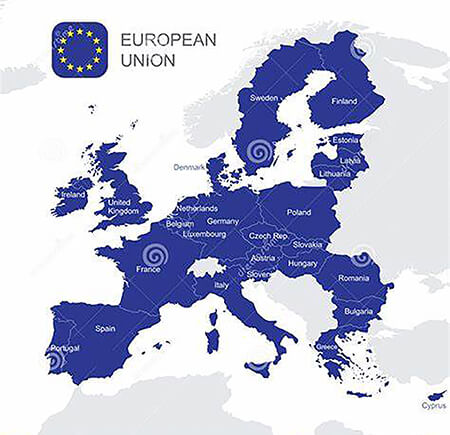
Note 1: EFTA includes Switzerland and has four member countries (Iceland, Norway, Switzerland, and Liechtenstein), but the CE mark is not mandatory within Switzerland;
Note 2: Due to the colonial era, CE certification is widely used and highly recognized worldwide. Some countries in Africa, Southeast Asia, and Central Asia may also accept CE certification.
Note 3: As of November 2019, Brexit is ongoing and the subsequent results are yet to be determined.
Applicable product scope
To understand the product scope of CE, it is necessary to understand the NLF regulations for CE certification. The NLF stipulates that products within its scope need to undergo CE certification. The EU's new legislative framework, NLF, currently has 22 directives, including the following:
1. Toy Safety - Directive 2009/48/EU
2. Mobile pressure equipment - Directive 2010/35/EU
3. Restriction of Hazardous Substances in Electrical and Electronic Equipment - Directive 2011/65/EU
4. Building Products - Regulation (EU) No 305/2011
5. Fireworks products - Directive 2013/29/EU
6. Entertainment boats and personal watercraft - Directive 2013/53/EU
7. Civilian explosives - Directive 2014/28/EU
8. Simple pressure vessels - Directive 2014/29/EU
9. Electromagnetic compatibility - Directive 2014/30/EU
10. Non automatic weighing instruments - Directive 2014/31/EU
11. Measuring Instruments - Directive 2014/32/EU
12. Elevators - Directive 2014/33/EU
13. Equipment and protective systems for potential explosive environments - Directive 2014/34/EU
14. Radio equipment - Directive 2014/53/EU
15. Low Voltage - Directive 2014/35/EU
16. Pressure equipment - Directive 2014/68/EU
17. Marine Equipment - Directive 2014/90/EU
18. Cableway Installation - Regulation (EU) 2016/424
19. Personal protective equipment - Regulation No. 2016/425
20. Gas appliances - Regulation (EU) 2016/426
21. Medical Devices - Regulation No. 2017/745
22. In vitro diagnostic medical equipment, regulation (EU) 2017/746
Note: NLF refers to the new legislative framework of the European Union, officially known as the "New Legislative Framework", which is a regulation of the EU to strengthen the market supervision framework and recognition system for products. In 2008, the "New Legislative Framework" was passed to unify the relevant concepts in the original New Method Directive system, and to provide specific regulations on national recognition agencies and recognition systems, the European Community market supervision framework, product market access controls, general rules for the use of logos, and European Community funding.
After familiarizing oneself with the regulatory framework, classify the corresponding products. The scope of CE certification is very wide. Simply put, most products exported to the European Union require CE certification. For electronic products and toys exported to Europe, CE certification is mandatory, such as:
Power supply: communication power supply, charger, monitor power supply, LCD power supply, UPS, etc;
Lighting fixtures: pendant lights, track lights, courtyard lights, handheld lights, tube lights, string lights, table lamps, grille lights, aquarium lights, street lights, energy-saving lamps, T8 tubes, etc;
Household appliances: fans, electric kettles, speakers, televisions, mice, vacuum cleaners, etc;
Electronics: earplugs, routers, mobile phone batteries, laser pens, vibrators, etc;
Communication products: telephones, wired telephones, wireless primary and secondary machines, fax machines, answering machines, data machines, data interface cards, and other communication products.
Wireless products: Bluetooth BT products, wireless keyboards, wireless mice, wireless readers, wireless transceivers, wireless microphones, remote controls, wireless network devices, wireless image transmission systems, and other low-power wireless products;
Wireless communication: 2G mobile phones, 3G mobile phones, 3.5G mobile phones, DECT mobile phones (1.8G, 1.9G frequency bands), etc;
Mechanical equipment: gasoline engines, welding machines, CNC drilling machines, tool grinders, lawn mowers, washing equipment, bulldozers, elevators, drilling machines, dishwashers, water treatment equipment, gasoline welding machines, printing machinery, woodworking machinery, rotary drilling machines, lawn mowers, snow sweepers, excavators, printing machines, printers, cutting machines, rollers, trowels, brush cutters, straighteners, food machinery, lawn mowers, etc;
Medical devices and toys, etc.
Common electronic and electrical products include:
Low voltage command: household appliances, IT/AV products, lighting products, etc
Electromagnetic compatibility directive: household appliances, IT/AV products, lighting products, etc
Mechanical instructions: all related products
Wireless RF and Communication Terminal Equipment Instructions: Wireless or Communication Terminal Products
Application Process
1. Apply for the company to fill out the application form, provide information, application form, product manual, and technical documents.
2. Evaluate the CE certification inspection standards and CE certification inspection items of the institution and provide a quotation.
3. Apply for company confirmation of the project and send samples.
5. The laboratory arranges product testing and evaluates the completeness of technical document review.
6. After the product testing meets the requirements, provide the product testing report or technical construction documents to the applying company, and issue a CE certificate after passing the test.
7. Apply for the company to sign a CE guarantee self declaration and affix the CE mark on the product.
application materials
1. The name and address of the manufacturer (EU authorized representative (EU authorized agent)), the name and model of the product, etc;
2. Product user manual;
3. Safety design documents (including key structural diagrams, which can reflect the climbing distance, gap, insulation layer and thickness of the design drawings);
4. Product technical conditions (or enterprise standards), establish technical documentation;
5. Product electrical schematics, block diagrams, and circuit diagrams, etc;
6. List of key components or raw materials (please select products with European certification marks);
7. Testing Report;
8. Relevant certificates issued by the EU authorized certification body NB (for modes other than Mode A);
9. Registration certificate of the product within the European Union (for certain products such as Class I medical devices and general IVD in vitro diagnostic medical devices);
10. CE Declaration of Conformity (DOC);
Certification Fee
The cost of CE certification is mainly related to the product and the selected institution, and whether it is urgent or not will also affect the quotation.
In addition to different quotes from different institutions, the cost is also related to the product itself. For example, ordinary products without RF only need to test EMC, while wireless products (such as Bluetooth, WIFI, 4G, etc.) need to test a large number of wireless and telecommunications commands in addition to the EMC part. This cost will undoubtedly increase significantly.
General electronic product CE certification fee:
·Ordinary low-voltage products have lower charges;
·Ordinary high-voltage products cost thousands of yuan;
·Wireless products have higher fees, usually ranging from several thousand to tens of thousands.
CE certification processing cycle for electronic products
Ordinary products take 7-10 working days.
Wireless products take about 3 weeks.
The significance of CE certification
1. The necessity of applying for CE certification is a requirement for exporting products to Europe.
CE certification is the passport for products to enter the markets of the European Union and European Free Trade Area countries.
CE certification indicates that the product has met the safety requirements specified in EU directives;
CE certification is a commitment made by enterprises to consumers, which increases their trust in the product; Products with CE markings will reduce the risk of sales in the European market.

Copyright © Dongguan Di'en Testing Co., Ltd. Technical Support: Dongguan Guangsu Network Guangdong ICP No. 15086094-1
Mailing Address: Di'en Testing, Wusha Community, Chang'an Town, Dongguan City
Metrology & Calibration Contact:
Mr. Tai - Mobile: 13760389645
Ms. Li - Mobile: 15817661429
Product Testing Contact:
Ms. Yang - Mobile: 18123900885
Reliability, Failure Analysis, & Materials Testing Contact
Mr. Ye - Mobile: 13613003484
Copyright © Dongguan Di'en Testing Co., Ltd. Technical Support: Dongguan Guangsu Network Guangdong ICP No. 15086094-1